

-
Yellow Pitaya, Dragon Fruit
Regular price From $37.95 USDRegular priceUnit price per$49.95 USDSale price From $37.95 USDSale -
Zamorano Pitaya, Dragon Fruit, Dark Red Fruit
Regular price From $37.95 USDRegular priceUnit price per$39.95 USDSale price From $37.95 USDSale -
Natural Mystic Pitaya, Dragon Fruit Red
Regular price From $37.95 USDRegular priceUnit price per$49.95 USDSale price From $37.95 USDSold out -
American Beauty Pitaya, Dragon Fruit Red
Regular price From $29.95 USDRegular priceUnit price per$39.95 USDSale price From $29.95 USDSold out -
 Sold out
Purple Haze Pitaya, Dragon Fruit
Regular price From $37.95 USDRegular priceUnit price per$39.95 USDSale price From $37.95 USDSold out -
Edgar Baby Dragon Fruit, Pitaya
Regular price From $29.95 USDRegular priceUnit price per$49.95 USDSale price From $29.95 USDSale -
White Vietnamese Jaina Dragon Fruit, Pitaya
Regular price From $29.95 USDRegular priceUnit price per$49.95 USDSale price From $29.95 USDSold out -
 Sold out
Guatemala, Pitaya, Dragon Fruit, Red
Regular price $74.95 USDRegular priceUnit price per$99.95 USDSale price $74.95 USDSold out -
 Sold out
Pitaya, Dragon Fruit Red
Regular price $74.95 USDRegular priceUnit price per$99.95 USDSale price $74.95 USDSold out -
Dragon Fruit, Pitaya, White, Lake Atitlan
Regular price $74.95 USDRegular priceUnit price per$109.95 USDSale price $74.95 USDSold out -
Dragon Fruit, Pitaya, David Bowie, White
Regular price $74.95 USDRegular priceUnit price per$109.95 USDSale price $74.95 USDSold out -
Dragon Fruit Voodoo Child, Red, Pitaya Roja
Regular price $74.95 USDRegular priceUnit price per$99.95 USDSale price $74.95 USDSold out


Dragon Fruit Trees for Sale - Premium Pitaya Varieties
Everglades Farm grows and ships dragon fruit plants from our nursery in Homestead, Florida. We carry 12 pitaya varieties, from self-pollinating types that fruit on their own to rare red-fleshed and yellow-skinned cultivars. Every plant we send is a rooted plant grown on from cuttings, not a seedling, so it carries the exact traits of the variety you ordered.
Dragon Fruit Product Types and Varieties: Rooted Plants, Cuttings, and Live Plants
Dragon fruit is a climbing cactus, so nurseries propagate it from cuttings rather than from seed or by grafting. A cutting taken from a mature plant is genetically identical to its parent, which is how a variety stays true. Seed-grown plants do not, and they can take five years or more to flower.
We sell live plants for planting, not fresh dragon fruit. The fruit in the photographs is what your plant produces once it is established, and the flavor notes below describe what each cultivar bears rather than anything we ship.
Our Dragon Fruit Tree Collection: 12 Product Types and Varieties
Two names you will see on other sites, Pink Panther dragon fruit and Bruni Green dragon fruit, are not in our catalog at present. What follows is what we actually grow, split by whether the plant sets fruit on its own.
Product Types: The Three Forms Dragon Fruit Is Sold In
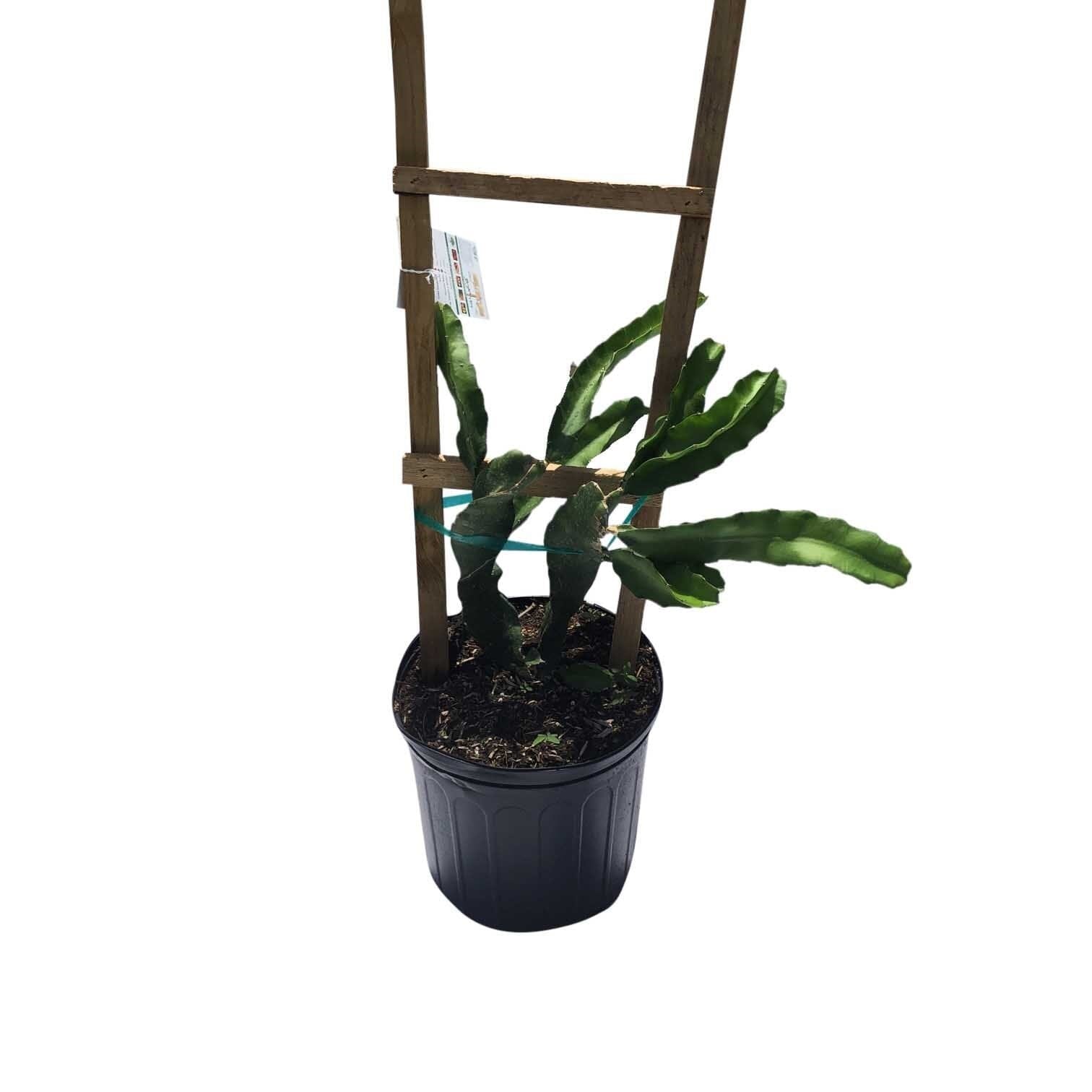
Dragon fruit reaches buyers in three different forms, and they are not interchangeable. Whole fruits sit in the produce aisle and cannot be grown from reliably, because seedlings do not come true to the parent. Unrooted plant cuttings are sold by weight and by the piece, cheap to ship but still weeks away from a root system. Live plants, the third form, are cuttings that a nursery has already rooted and grown on in containers.
Everglades Farm sells the third form only. Container sizes vary by variety and by what has finished rooting, and the size you are buying is listed on each product page.
Product Types and Varieties That Self-Pollinate
- Yellow Pitaya: Bright yellow-skinned fruit with white flesh and an extremely sweet flavor close to kiwi. This is Selenicereus megalanthus, still listed by many growers under its older name Hylocereus megalanthus, and it is a smaller-growing plant that suits container culture.
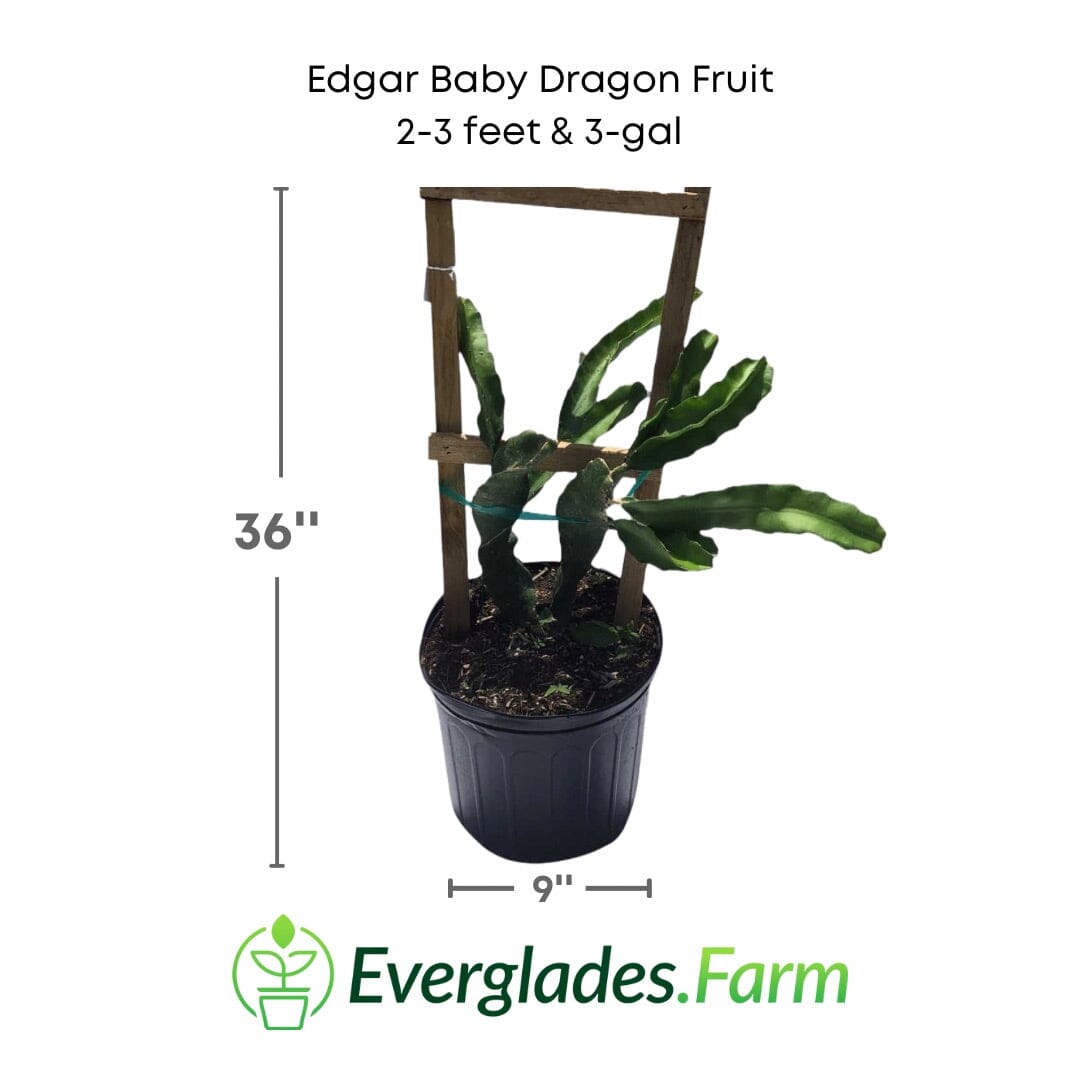
- Edgar Baby: A compact pitaya dulce with light pink skin and white pulp. The short internodes make it the easiest variety here to keep on a patio trellis.
- Purple Haze: Magenta flesh, closer to a pink fleshed fruit than a red one, with a mild sweetness, and one of the varieties that commands a premium at specialty markets.
- White Vietnamese Jaina: Pink skin over white-fleshed fruit, and a heavy producer once established.
- American Beauty: A widely planted commercial variety with red-magenta pulp and a floral finish.
- David Bowie: A slim white-fleshed variety with a mild, faintly lemony taste. Good in containers.
- Voodoo Child: Small sangria-colored fruit with a grape-like sweetness, on a plant that flowers well.
Product Types and Varieties That Need a Pollinator
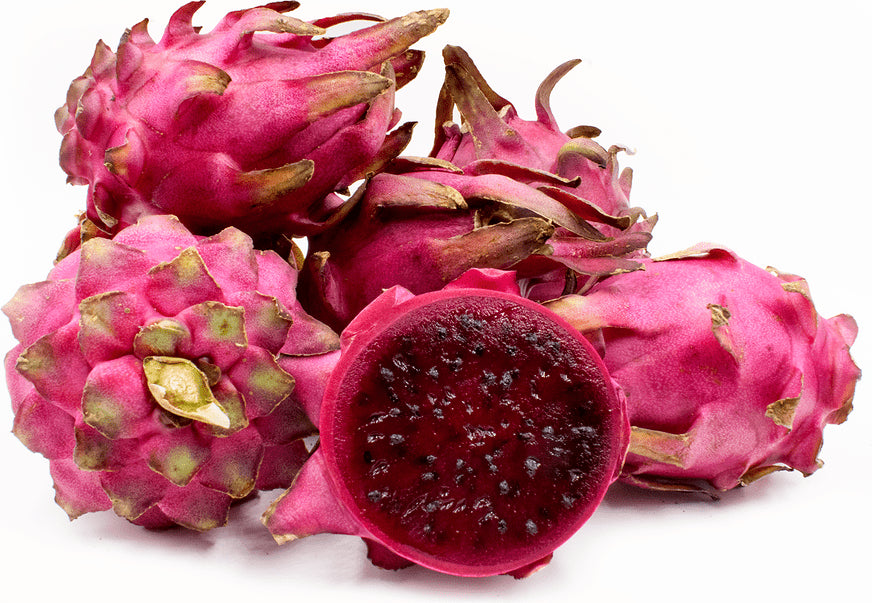
These need pollen from a compatible cultivar. Plant two or more of them, or pair one with a self-fertile variety, and hand-pollinate at night when the flowers open.
- Pitaya Roja: The classic red dragon fruit, bold and tropical, and a vigorous climber.
- Guatemala: A Hylocereus guatemalensis hybrid with dark red pulp and a slightly tart, berry-like taste.
- Natural Mystic: Bright red skin and flesh, drought tolerant once rooted, and a strong cropper.
- Lake Atitlan: Named for the Guatemalan lake. Large white-fleshed fruit with a light, refreshing taste.
- Zamorano: Deep red pulp with a wine-like sweetness. Grown for specialty markets.
Growing Dragon Fruit from Cuttings: Propagation and Root Establishment
If you propagate dragon fruit cuttings yourself, take a segment 12 to 18 inches long from healthy growth and let the cut end callus in shade for a week. Planting a fresh cut straight into damp soil is the usual cause of rot.
- Set the callused cutting two inches deep in a fast-draining cactus potting mix.
- Water sparingly until you feel resistance when you tug the cutting. That resistance is root establishment, and it usually takes four to eight weeks in warm weather.
- Give the cutting support to climb from the start. A cactus that leans on the ground roots in the wrong places and flowers late.
- When roots fill the pot, transfer to a larger container or plant out. Repotting is easier before the plant reaches the top of its trellis.
- Take cuttings in the growing season. Replanting cuttings in cool weather stalls them for months.
Watering dragon fruit cuttings is where most beginners lose them. Keep the mix barely damp until roots take, then water normally. Rooted plants skip every step above, which is why most of our customers buy them instead. Growing multiple cultivars on one post improves pollination and stretches the harvest over a longer window.
Growing from Cuttings: What Usually Goes Wrong
Three things account for most failed dragon fruit cuttings. The cut end went into soil before it callused, so it rotted. The mix held water, so it rotted. Or the cutting was taken outside the growing season and sat there doing nothing until it shrivelled. None of these are recoverable once they set in, which is the argument for buying rooted plants rather than propagating dragon fruit cuttings yourself.
Planting and Growing Instructions for Dragon Fruit Cactus
Planting and Growing Instructions: Climate, Soil, and Water
- Zones: USDA Zones 9-11 outdoors. In colder zones, grow in containers and move the plant into a greenhouse or a protected microclimate before the first frost.
- Soil: Well drained soil at pH 6.0 to 7.0. A cactus potting mix cut with coarse sand works for container culture.
- Sun: Full sun produces the most flowers. In desert heat, light afternoon shade prevents scorching on the stems.
- Water: Deep and infrequent. These are cacti, and standing water at the roots kills them faster than drought.
- Support: A six to eight foot support pole or trellis with a frame at the top. The plant climbs, then cascades, and it flowers on the hanging growth.
- Feeding: An organic fertilizer through the growing season, eased off as temperatures drop.
Planting and Growing: Trellis, Support Pole, and Container Culture
A dragon fruit cactus is a vine that thinks it is a tree. Give it a support pole it can climb, a frame at the top it can spill over, and the plant does the rest. Growers in colder zones keep the same setup inside greenhouses or against a south wall, where a protected microclimate holds the warmth a tropical cactus needs. Well drained soil matters more than pot size, and watering less than you think is the single habit that keeps these plants alive.
Buying and Ordering Information for Dragon Fruit Plants
Every order is a website purchase through this store. Orders take two to three business days to prepare, and you get a confirmation email with tracking once the plant ships. Transit runs one to seven days depending on distance, and most Florida orders arrive within two business days.
- Shipping: Free within Florida and select southern states on qualifying orders. Discounted UPS, FedEx, and USPS rates elsewhere, shown at checkout.
- Packaging: Stems are packed to survive a long ride, with growing instructions in the box.
- Limits: No ground service to Washington, Oregon, Idaho, or Montana. Hawaii, Alaska, and the U.S. territories need express. Street addresses only.
- Cold weather: Order when your area stays above 50F day and night. We hold a shipment during a cold snap and send it when conditions are safe.
Farm Background and Stories: Growing Pitaya in Homestead, Florida
Everglades Farm Nursery sits at 19775 SW 296 Street in Homestead, Florida, south of Miami and at the edge of the Everglades. Warm nights, a long season, and the limestone soils of the Redland let tropical stock grow hard and ship strong.
Farm Background: Night-Blooming Flowers and Harvest
Dragon fruit earns its place on the farm. The plant is a climbing cactus, so it grows up posts rather than out across beds, and the night-blooming flowers open after dark for a single night. Each plant is grown on in containers until its roots hold the pot.
Farm Stories: Warm Climates and How We Grow Pitaya
Harvest here runs through the warm months, and a plant that has found its support to climb will carry several flushes in a season. The dragon fruit cactus plant is at home in warm climates and does nothing at all in the cold.
Best Dragon Fruit Product Types and Varieties by Use
- Container growing: Edgar Baby, David Bowie, Yellow Pitaya
- First-time growers: White Vietnamese Jaina, Voodoo Child, Purple Haze
- Bold flavor: Zamorano, American Beauty, Natural Mystic
- Commercial planting: American Beauty, Zamorano, Natural Mystic
- Something unusual: Yellow Pitaya for the skin color, Guatemala for the tartness
Frequently Asked Questions About Growing and Buying Dragon Fruit Plants
Frequently Asked Questions About Planting and Care
How soon will my plant fruit? A rooted plant usually flowers in its first or second season once it reaches the top of its support. Plants left without a trellis take longer.
Do I need two plants? Not for the self-pollinating varieties above. Cross-pollinating types need a compatible partner, and even self-fertile varieties set more fruit when another cultivar is nearby.
Can I grow dragon fruit in a pot? Yes. Use a wide container of at least 20 gallons with a support pole, a cactus potting mix, and full sun. Container growing is how growers outside USDA Zones 9-11 keep these plants through a cold winter.
Frequently Asked Questions About the Fruit Itself
What does dragon fruit taste like? White fleshed fruit is mild and refreshing, close to a melon. Red and magenta flesh runs sweeter with a berry edge. The yellow-skinned fruits are the sweetest of the lot, which is why Yellow Pitaya sells out first.
How do I know when the fruit is ripe? The skin colors up fully and the little leafy fins at the tip start to dry and curl back. Ripe fruit gives slightly under a thumb, like a ripe avocado. Pick it then, because dragon fruit does not sweeten any further once it is off the plant.
How long does the fruit keep? About a week in the refrigerator, less on the counter. It is best eaten within a few days of picking, and it does not ripen any further once picked.
Frequently Asked Questions About Rooted Plants and Rare Varieties
What size plant will I receive? Production size varies by variety and by what is ready that week. The pot size is listed on each product page, and your rooted plant ships in that container.
Which are the high-flavor varieties? Zamorano, American Beauty, and Natural Mystic are the ones buyers come back for. Yellow Pitaya is the sweetest of the group, and the rare varieties tend to sell out first in the growing season.
Where do I get planting and care help? Growing instructions go in the box, and expert guidance is a question away at csr@everglades.farm.
Why are the flowers open at night? Dragon fruit is pollinated by moths and bats in its native range. The flowers open after sunset and close by mid-morning, which is why hand-pollination is done at night.
Is dragon fruit good for you? The fruit is low in calories and provides vitamin C, fiber, magnesium, and iron. Red varieties get their color from betalains, which are antioxidant pigments.
How long do the plants live? Decades, with pruning. Remove old growth after the harvest and the plant keeps renewing itself.
Customer Reviews and Testimonials from Our Buyers
Customer Reviews and Testimonials on Each Variety
Everglades Farm collects customer reviews through Judge.me, and they sit on the product page for each variety rather than on this collection page. Buyers leave them after the plant arrives, so the feedback you read against a dragon fruit variety comes from someone who received that plant from this nursery.
Several of our dragon fruit varieties are newer to the catalog than our mango and avocado trees, so a few of them carry no reviews yet. We would rather send you to the reviews on the product page than borrow praise from a different crop. Open the product page of the variety you are considering and the reviews, where buyers have left them, sit below the description.
If you have bought from us, a review helps the next buyer more than it helps us. Tell people what condition the plant arrived in, how it was packaged, how long it took to root, and whether it has flowered. Those are the details buyers ask us about before they order, and they are the details a vendor cannot answer as convincingly as a customer can.
Customer Reviews and Testimonials: Judging a Vendor You Cannot Visit
Buying a live plant from a nursery two thousand miles away comes down to trust, and reviews are one of the few things a buyer can check. Read them for the parts that repeat. How was the plant packaged, what condition did it arrive in, and did the vendor answer when something went wrong. Those patterns tell you more than any single five-star line.
Order Dragon Fruit Plants from Everglades Farm
Browse the 12 varieties above, pick the one that matches your climate and your trellis, and we will ship a rooted plant grown at our Homestead nursery. If you are unsure which variety suits your setup, email csr@everglades.farm and we will point you to one.
