
-
Red Sugar Apple, Sweetsop, Annona Tree
Regular price From $39.95 USDRegular priceUnit price per$49.95 USDSale price From $39.95 USDSale -
Green Sugar Apple, Sweetsop, Annona Tree
Regular price From $34.95 USDRegular priceUnit price per$49.95 USDSale price From $34.95 USDSale -
Na Dai Sugar Apple Vietnamese, Sweetsop, Annona Tree
Regular price From $37.95 USDRegular priceUnit price per$49.95 USDSale price From $37.95 USDSale -
Yellow Sugar Apple, Sweetsop, Annona Tree
Regular price From $29.95 USDRegular priceUnit price $29.95 per item$49.95 USDSale price From $29.95 USDSold out -
Green Asian Sugar Apple Tree | Arbol de Anona Asiatica fruta verde
Regular price From $74.95 USDRegular priceUnit price per$99.95 USDSale price From $74.95 USDSold out


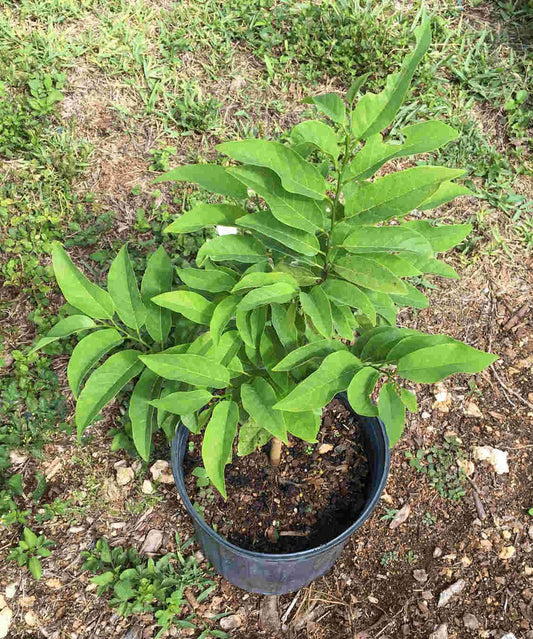
Let’s talk about Sugar Apple Trees, those tropical gems you might not know yet, but are about to fall in love with.
You’ve probably tried Granny Smith or Fuji apples, but have you heard of sugar apples? These aren’t apples in the traditional sense. Belonging to the Annona family (also called sweetsop or custard apple), sugar apples are tropical treasures with creamy texture and incredible flavor.
Varieties of Sugar Apple
Which one belongs in your garden? At Everglades Farm we grow five varieties of sugar apple, and each earns its place for a different reason.

- Green Sugar Apple (Sweetsop): the classic favorite. The green sugar apple tree carries heart-shaped green fruit with sweet, custard-like pulp.
- Red Sugar Apple (Sweetsop): reddish skin, a slightly bolder aroma, and just as creamy inside. A red sugar apple (sweetsop) stands out in a mixed planting.
- Na Dai Vietnamese Sugar Apple: the na dai vietnamese sugar apple is prized for extra sweetness and smooth texture, with fewer seeds and more edible pulp than most.
- Green Asian Sugar Apple Tree: the green asian sugar apple tree produces vibrant green fruit with excellent flavor and sets heavily through a warm summer.
- Yellow Sugar Apple (Sweetsop): golden skin at maturity and a mild, honeyed finish. The quietest of the five, and the one repeat growers ask for by name.
Each type shares the same tropical charm but brings its own twist, which makes them exciting trees to grow at home.
Benefits and Appeal of Sugar Apples
Why do people plant one after tasting a single fruit? Sugar apples are not just delicious, they are loaded with natural goodness. Packed with vitamins A, C, and B6, plus fiber, iron, potassium, and antioxidants, they support your immune system, digestion, and overall vitality.

Then there is the eating. The creamy texture is what people describe first: imagine a custard with tropical notes of banana, pineapple, and vanilla. That rich flavor makes sugar apples perfect fresh, blended into smoothies, or turned into ice cream, sorbets, and juices.
Texture is half the appeal. The sweet, custard-like pulp has a smooth texture that spoons out cleanly, and a heart-shaped green fruit hides more edible pulp than its size suggests. Growers chasing extra sweetness and fewer seeds usually reach for the na dai vietnamese sugar apple. No wonder these are a must-have fruit across Asia, the Caribbean, and Latin America.
Growing and Caring for Sugar Apple Trees
How much work is one, really? Sugar apple trees are beginner-friendly. They are naturally small and manageable, which makes them great for backyards or patios. Outdoors they reach 15-20 feet, but grown in containers they stay compact and can thrive indoors or in a greenhouse.

Here are a few tips for success:
- Sunlight: give your tree 6-8 hours of direct sun daily.
- Soil: well-drained soil works best, and avoid soggy roots.
- Watering: keep the soil slightly moist, especially in warm weather.
- Fertilizer: apply balanced fertilizer every 6-8 weeks to encourage steady growth and fruiting.
- Pruning: light pruning after harvest helps shape the tree and boost next year’s yield.
- Climate: sugar apples love the same tropical and subtropical conditions as most tropical fruits. They do not tolerate frost, so protect them if temperatures drop below 40°F.
These trees are self-fertile, so you only need one to get fruit, though planting two often increases production. Best of all, care is light and the trees usually start producing within 2-3 years, whether they live in a home or garden bed.
Frequently Asked Questions
- What is a sugar apple? It is a tropical fruit from the Annona squamosa tree, also called sweetsop.
- What are the benefits? High in vitamins, fiber, and antioxidants, sugar apples support health while satisfying your sweet tooth.
- Can I grow sugar apples in a pot? Yes. They adapt very well to containers, which makes them a great choice even if you do not have much space.
- How long until they fruit? With proper care, expect fruit in 2-3 years.
- Do sugar apples grow in colder regions? They thrive in warm climates, but with a container and indoor protection you can grow them almost anywhere.
- When is a sugar apple ripe? The segments separate slightly and the fruit gives to gentle pressure. Pick it then and let it soften indoors for a day or two.
- Which variety is sweetest? Most growers point to the na dai vietnamese sugar apple for extra sweetness and fewer seeds.
Ready to Grow Your Own?
Whether you choose the classic Green Sugar Apple Tree, the eye-catching Red variety, the extra-sweet Na Dai Vietnamese Sugar Apple, the special Green Asian Sugar Apple Tree, or the Yellow Sugar Apple, you are bringing home a tree that is as rewarding to grow as it is to taste.
Order today and enjoy fast shipping straight from Florida. With the right care, your sugar apple tree will fill your home or garden with beauty, and your table with one of the most delicious tropical fruits in the world.
