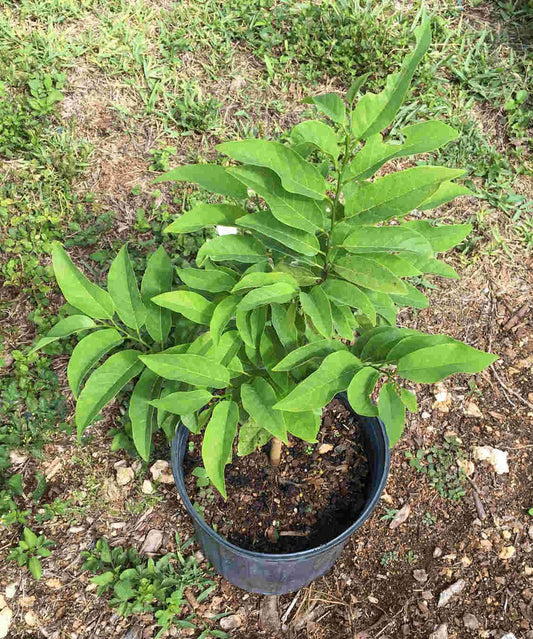
Sugar Apple Tree for Sale | Florida-Grown Annona squamosa


Looking for a sugar apple tree for sale that ships healthy, Florida-grown, true-to-variety, and ready to fruit? Our Florida-grown Annona squamosa — also known as the sweetsop (and sometimes loosely called custard apple) — produces creamy-white flesh with a vanilla custard flavor and tropical notes of pineapple and banana. Pick the variety that fits your climate, and we'll ship it straight from our South Florida nursery. New to growing tropical fruit? Don't worry — the sugar apple is one of the more beginner-friendly Annonas once it has warmth and full sun, though a little hands-on help at bloom time goes a long way (more on that below).
Sugar Apple Varieties We Sell

Five sweetsop varieties, each grown from premium seed stock. Browse the full sugar apple trees collection or jump straight to a favorite below:
- Green Sugar Apple (Sweetsop) — the classic Annona squamosa tree with heart-shaped fruit, knobby segments, and light green skin.
- Red Sugar Apple — reddish-purple skin, bolder aroma, and the same creamy custard texture.
- Na Dai Vietnamese Sugar Apple — extra-sweet, smooth and slightly grainy, with fewer dark brown seeds, and one of the better varieties at setting fruit on its own.
- Green Asian Sugar Apple — vigorous, with bright green conical fruit and a thick rind.
- Yellow Sugar Apple — golden-skinned, fragrant, and a collector favorite.
If you love the Annona family, you can also browse our soursop trees, atemoya trees, and red custard apple trees.
Benefits of Growing a Sugar Apple Tree
- Taste — creamy custard texture with vanilla and pineapple notes; perfect fresh, in smoothies, or as ice cream.
- Nutrition — naturally rich in vitamin C, vitamin B6, fiber, and potassium.
- Compact size — mature trees reach 15–20 feet outdoors but stay 6–8 feet in containers.
- Ornamental — fragrant flowers and glossy leaves make it a landscape standout.
- Self-fertile — a single tree can set fruit on its own, so you don't need a second one. Just know that, like all Annona, sugar apple flowers pass through their female and male stages at different times, so natural fruit set depends on tiny nitidulid beetles and can be light in some yards. A few minutes of hand pollination during bloom dramatically improves both the number of fruit and their size and shape (see the FAQ below).
Sugar Apple Tree Care and Growing Conditions

Sugar apples are tropical trees that love warmth. They grow best outdoors year-round in USDA Zones 10–11, and they thrive when temperatures stay between about 68°F and 100°F. They can also be grown in the ground in Zone 9, but only in frost-protected spots or warm microclimates — they do not tolerate freezing, so an unprotected tree can be damaged or killed by a hard freeze.
Cold is their weak spot. Young trees can be damaged below 32°F. A mature tree may survive a brief dip into the high 20s°F, but prolonged cold below 59°F can make it drop its leaves. If you live in Zone 9 or colder, growing your sugar apple in a container so you can move it indoors for the winter is the safest bet — a patio alone won't save it from a hard freeze.
Tip: In Zone 9 or colder? Grow your sugar apple in a large pot so you can roll it indoors before the first frost.
A quick safety note: only the ripe, soft white pulp is edible. The seeds, leaves, and bark contain natural compounds that aren't safe to eat, so don't chew or crush the seeds, and keep them away from children and pets.
Quick Care Guide
- Sun — full sun, 6–8 hours daily.
- Soil — well-draining soil rich in organic matter; mix compost into the planting hole.
- Water — keep soil evenly moist in the growing season; let the top inch dry between waterings.
- Container — choose a large pot with drainage holes; repot when the root ball fills the pot.
- Fertilizer — a balanced 8-3-9 or 6-6-6 every 6–8 weeks during active growth.
- Mulch — 2–3 inches around the base to lock in moisture; keep mulch off the trunk.
- Pruning — light pruning after harvest shapes the tree and boosts next season's fruit.
- Pollination — for heavy, well-formed fruit, hand-pollinate during bloom: collect pollen from flowers in the afternoon (male stage) and brush it onto newly opened flowers the next morning (female stage). It takes just a few minutes and makes a big difference.
- Temperature — prefers temps above 50°F; protect from frost and move containers indoors below 40°F.
- Indoors / greenhouse — a bright south-facing window or heated greenhouse works for cold zones.
Grafted trees typically fruit in 2–3 years.
How to Hand-Pollinate a Sugar Apple

Hand pollination is the single biggest lever for a heavy, well-shaped crop — especially for home growers in Florida and Texas where natural beetle pollination can be hit or miss. In the afternoon, collect pollen from flowers in their male stage; the next morning, gently brush it into newly opened flowers in their female stage.
Sugar Apple Tree FAQ
Is a sugar apple the same as a sweetsop?
Yes — sugar apple, sweetsop, and Annona squamosa are the same fruit. "Custard apple" is sometimes used for it too, though that name more often refers to related Annona species.
Where can I grow a sugar apple tree?
USDA Zones 10–11 outdoors, and Zone 9 with frost protection. Anywhere colder, grow it in a container and move it inside before temperatures drop below 40°F.
How long until it fruits?
Our grafted trees usually fruit in 2–3 years with full sun, well-draining soil, and steady feeding.
Do I need two trees for pollination?
No — sugar apples are self-fertile, so one tree can fruit on its own. The bigger factor is pollination itself: the flowers are pollinated by small beetles, so fruit set can be light without help. Hand pollination during bloom is the most reliable way to get a heavy crop of well-shaped fruit. A second tree can supply extra pollen but isn't required.
Can I grow a sugar apple tree in a pot?
Yes. Use a 15–25 gallon container with drainage holes and prune to keep it compact. This is the best option for cold climates.
What does a sugar apple taste like?
Creamy custard with notes of vanilla, banana, and pineapple, eaten fresh by the spoonful.
Order Your Sugar Apple Tree Today
Ready to buy a sugar apple tree from a grower tropical fruit tree lovers in Florida trust? Every Annona squamosa is hand-grafted, acclimated, and shipped with a plant health guarantee. Browse the sugar apple collection, pick your favorite sweetsop variety, and we'll send your sugar apple tree on its way to your door.